
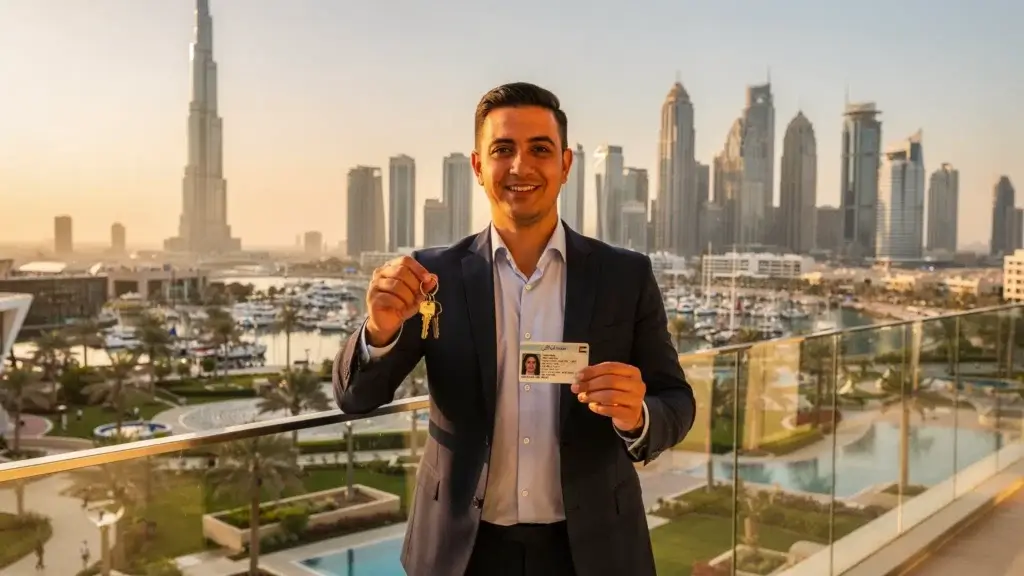
Buying a home in Dubai can be more than a lifestyle or investment decision. For many overseas buyers, it can also create a route to UAE residency, provided the property and the applicant meet the relevant immigration requirements.
The short answer is yes, buying property in Dubai can help you apply for a residence visa. The important detail is that residency is not automatic. You still need to qualify under the applicable property investor category, prepare the correct documents, complete medical and Emirates ID procedures, and receive approval from the relevant authorities.
This guide explains how a Dubai property investor visa works, the main investment thresholds, the difference between standard property residency and the Golden Visa, and what investors should check before committing to a purchase.
Can buying property in Dubai help you get UAE residency?
Yes, property ownership can support a UAE residence visa application if the real estate meets the minimum value and eligibility rules set by the authorities. In Dubai, property-based residency is generally available through two main routes:
- A renewable property owner residence visa for qualifying real estate owners
- A long-term Golden Visa for investors who meet higher property investment criteria
The process is usually handled through Dubai government service channels such as Amer centres and GDRFA-related procedures. In practice, many applicants work with an authorized Typing Centre in Dubai to prepare applications, check documents, and reduce avoidable delays.
A property owner visa Dubai application is not granted simply because you sign a sales agreement. Authorities typically look at the title deed, property value, ownership share, mortgage status, health insurance, medical fitness, and identity documentation.
Minimum property investment requirements in Dubai
The most important question for most buyers is simple: how much property value is required to apply for residency?
As of recent UAE and Dubai practice, the commonly referenced thresholds are AED 750,000 for a standard property investor residence visa and AED 2 million for the real estate investor Golden Visa. Rules can be updated, so investors should confirm the latest requirements before purchasing or applying.
| Path | Typical Duration | Who It Suits | Family Sponsorship | Where Processed | Key Proof |
|---|---|---|---|---|---|
| Property Owner Residence Permit | 2 years (renewable) | Individuals with one or more completed properties meeting the minimum value | Spouse and children usually allowed, subject to standard rules | Amer Centers, GDRFA Dubai | Title deed, passport, valid health insurance, basic financial proof |
| Golden Visa for Property Investors | Up to 10 years | Investors with qualifying real estate assets under the Golden Visa category | Broader sponsorship flexibility | Amer Centers, GDRFA Dubai | Title deed plus supporting evidence as required for the category |
Eligibility checklist for a UAE property visa
Before you purchase a unit specifically for residency purposes, check whether your profile and property are likely to qualify. This step can prevent expensive mistakes.
A typical eligibility checklist includes:
- The property value meets the minimum threshold for the selected visa category
- The property is registered in your name or your ownership share meets the required value
- A valid title deed is available, where required
- The property is not blocked by unresolved legal disputes or registration issues
- Mortgaged property documentation, if applicable, is accepted by the authorities
- Your passport is valid and personal information matches the title deed
- You can complete medical fitness testing in the UAE
- You have valid UAE health insurance where required
- Your civil documents are attested and translated if you plan to sponsor family members
A common misunderstanding is that any property purchase qualifies. In reality, eligibility depends on the registered value, ownership structure, property status, and the exact visa route.
Freehold vs leasehold property: why it matters
Foreign investors in Dubai often come across two important ownership terms: freehold and leasehold. Understanding the difference is essential if your goal is residency.
Freehold property
Freehold ownership generally gives the buyer full ownership rights over the property in designated areas. These areas are popular with foreign buyers because ownership can be registered with the Dubai Land Department, and a title deed can be issued in the owner’s name.
For most property-based residence applications, a clear title deed is one of the key documents. This is why freehold property is usually the more straightforward option for investors seeking a Dubai real estate visa.
Leasehold property
Leasehold rights usually allow the buyer to use the property for a long period, often up to 99 years, depending on the contract and location. However, leasehold arrangements may not always create the same residency eligibility as freehold ownership.
If you are considering leasehold property, do not assume it will qualify for a property owner visa Dubai application. Ask for confirmation before signing any purchase agreement, especially if residency is a major reason for the investment.
What about off-plan and mortgaged properties?
Off-plan and financed properties require extra care.
In many standard property visa cases, completed property with an issued title deed is the safer route. Off-plan units may not qualify for a regular property owner residence visa until completion, registration, and title issuance. For Golden Visa cases, some off-plan and mortgaged properties may be considered if they meet current authority conditions, but the documentation must be correct.
For mortgaged property, applicants are often asked to provide a bank letter or proof showing the required equity or property value position. The wording and format matter. A small documentation issue can delay the file even when the investment itself is eligible.
Practical tip: if your property is financed, ask a visa specialist to review the title deed and bank documents before application submission. This is one of the most common areas where applicants lose time.
Step-by-step application process
The process can vary depending on whether you apply for a standard property visa or Golden Visa, but most applications follow a similar sequence.
- Confirm the property qualifies for the relevant visa category.
- Gather your passport, title deed, property valuation documents if needed, photos, health insurance, and any mortgage letters.
- Open or type the application through the correct Dubai service channel.
- Complete entry permit or status change procedures if required.
- Attend medical fitness testing at an approved centre.
- Complete Emirates ID application and biometrics if required.
- Submit final residency documents for approval.
- Receive your residence permit and Emirates ID once processing is complete.
- Apply for family sponsorship if you meet the standard requirements.
If you are applying with family, prepare civil documents early. Marriage and birth certificates issued outside the UAE may need attestation, certified translation, and proper formatting before they can be used for sponsorship. Arabian Business Centre can assist with UAE attestation and translation services where required.
Visa duration and renewal process
A standard Dubai property investor visa is usually renewable as long as you continue to meet the eligibility conditions. This means the qualifying property must remain under your ownership, documents must be valid, and renewal procedures must be completed on time.
The Golden Visa offers a longer validity period, often up to 10 years for eligible real estate investors. It is designed for people who want a more stable long-term base in the UAE.
For renewals, applicants should generally prepare:
- Updated passport and Emirates ID details
- Valid health insurance
- Current property ownership documents
- Any updated mortgage or bank letters if applicable
- Medical fitness requirements, where requested
Do not wait until the last few days before expiry. Renewal delays can create issues with Emirates ID validity, family sponsorship, banking, and travel planning.
Benefits of residency through property investment
A UAE property visa is attractive because it can combine lifestyle, investment, and residency planning in one route.
Key benefits may include:
- Ability to live in the UAE during the visa validity period
- Easier access to UAE banking, utilities, and long-term services
- Option to sponsor eligible family members, subject to rules
- Greater convenience for frequent business or personal travel to the UAE
- Potential long-term residency stability for Golden Visa holders
- A stronger base for investors managing Dubai real estate assets
That said, property-based residency should be viewed as an immigration benefit attached to a qualifying investment, not the only reason to buy. The property itself still needs to make financial sense.
Legal and financial considerations before buying
Before buying property in Dubai for visa purposes, take time to review both the real estate and immigration sides of the decision.
Check the developer, building, and title status
Make sure the property is properly registered and that the seller has the legal right to sell. For off-plan property, review the developer’s track record, escrow arrangements, completion timelines, and handover conditions.
Understand all purchase costs
The purchase price is not your only cost. Buyers may need to budget for Dubai Land Department fees, agency commission, mortgage fees, service charges, insurance, maintenance, and visa processing costs.
Do not rely only on verbal promises
If an agent says the property will qualify for residency, ask for evidence and confirm with a qualified visa professional. Rules can differ depending on the property type, ownership share, mortgage position, and current authority practice.
Consider tax and home-country obligations
UAE residency can affect your banking, tax planning, and reporting obligations in other countries. Speak to a qualified tax adviser if you are relocating, spending significant time in the UAE, or changing your country of residence.
Common mistakes investors should avoid
Many delays happen because buyers focus on the property purchase but ignore the visa file until later.
Mistake | Why it causes problems | Better approach |
Buying off-plan without checking visa timing | The unit may not qualify until completion or title issuance | Confirm eligibility before purchase |
Assuming joint ownership automatically qualifies both owners | Each owner’s share may need to meet value rules | Review ownership percentages in advance |
Submitting incomplete mortgage documents | Bank letters must match accepted requirements | Get documents checked before submission |
Using inconsistent names across documents | Passport, title deed, and certificates must align | Correct discrepancies early |
Forgetting family document attestation | Sponsorship files may be delayed | Attest and translate civil documents before applying |
Choosing property only for visa eligibility | A poor investment can create long-term financial stress | Evaluate location, yield, fees, and resale demand |
The most practical advice is simple: check the visa route before you buy, not after.
How Arabian Business Centre supports property investors
Property-based residency involves both real estate documentation and immigration procedures. A small error in typing, document format, or supporting evidence can slow down approval.
Arabian Business Centre helps property owners with application typing, document review, GDRFA-related submissions, medical and Emirates ID guidance, and follow-up support through the process. If your case may qualify for long-term residency, the team can also assess whether the Golden Visa route is suitable.
If you already own property and want to know your next step, you can request a case review through Arabian Business Centre. A specialist can check your title deed, ownership structure, and documentation before you apply.
Frequently Asked Questions
Off plan property typically does not qualify until completion and issuance of a title deed in your name.
Expect a valid passport, recent photos, health insurance, title deed, and basic financial documents. Additional papers may be requested based on your case.
Yes, you can usually sponsor spouse and children after your residency is issued if you meet standard family sponsorship rules and provide attested civil documents.
Yes, you can usually sponsor spouse and children after your residency is issued if you meet standard family sponsorship rules and provide attested civil documents.
The Golden Visa is a long term residency available to qualifying investors, including certain property owners, with broader benefits compared to a standard property owner visa.
Timelines vary based on documentation, medical fitness, biometrics scheduling, and security checks, so planning ahead is recommended.