
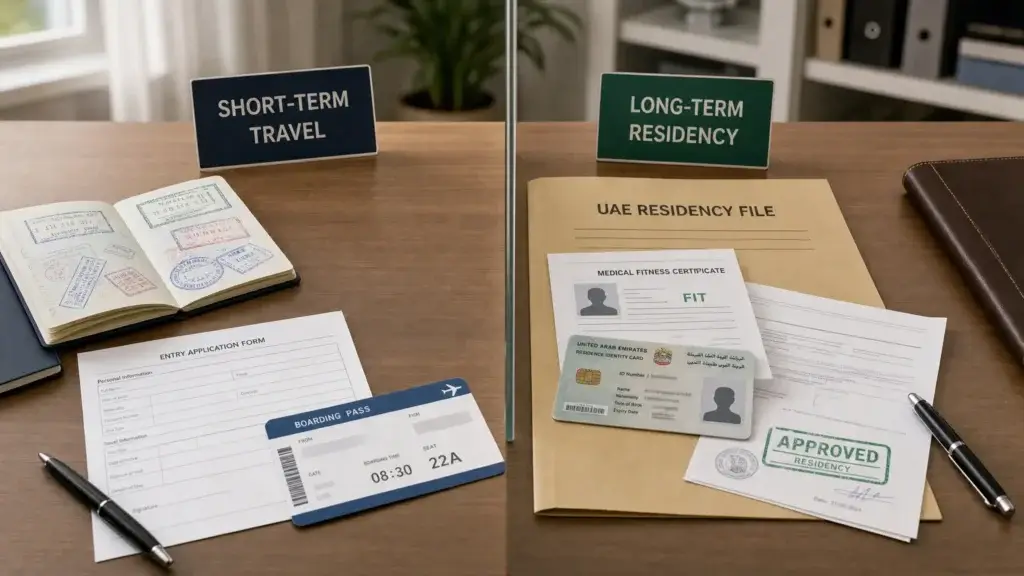
A visa is permission to enter a country or stay there for a specific purpose and period. A residence permit is permission to live in that country as a resident after meeting eligibility requirements.
The difference between visa and residence permit matters because both documents can affect travel, work, family sponsorship and access to local services. In the UAE, people often use terms like residence visa, entry permit and resident permit together, which can create confusion for visitors and new residents.
This guide explains the practical difference in simple terms with a Dubai and UAE focus. It also shows when you may need help from a government transaction provider such as Arabian business center for accurate typing, submission and follow-up.
What does a visa mean?
A visa is usually the first permission linked to entering or staying in a country. It may be issued for tourism, transit, business meetings, family visits, employment entry or another short-term purpose.
In the UAE, a visa can take different forms. A tourist visa allows a visitor to enter for leisure. A visit visa may be used for family or business visits. An entry permit can allow someone to enter the UAE before completing a longer residence process.
A visa does not automatically make someone a resident. It gives permission based on the category approved by the authority. The allowed activities, duration and renewal options depend on the visa type.
For Dubai applications, the relevant route may involve GDRFA, Amer services or authorized channels. Many applicants also use an online visa application UAE process when the transaction can be completed digitally.
What does a residence permit mean?
A residence permit gives a person legal permission to live in a country for a longer period. In the UAE, this is commonly called a residence visa, even though the purpose is residency rather than a short visit.
A UAE resident usually receives an Emirates ID and has a residency file linked to a sponsor or self-sponsored category. Common residency routes include employment, family sponsorship, investor or partner residency, property-related residency, Green Visa and Golden Visa categories.
A residence visa is important because it connects to everyday life in the UAE. It can be required for banking, housing, telecom services, school registration, health insurance records and many government transactions.
Unlike a short-term visit visa, a residence permit normally involves additional steps. These may include medical fitness, Emirates ID typing, biometrics, insurance requirements and final approval from the relevant authority.
Difference between visa and residence permit: quick comparison
The easiest way to understand the difference is to look at purpose. A visa often focuses on entry or temporary stay, while a residence permit focuses on living in the country as a resident.
| Point of Comparison | Visa | Residence Permit |
|---|---|---|
| Main purpose | Allows entry or temporary stay for an approved reason | Allows long-term living as a legal resident |
| Common UAE examples | Tourist visa, visit visa, transit visa, entry permit | Employment residence, family residence, investor residence, Golden Visa |
| Resident status | Usually does not create resident status by itself | Creates resident status when approved and active |
| Emirates ID link | Not usually linked to Emirates ID for tourists or visitors | Usually linked to Emirates ID for UAE residents |
| Typical rights | Limited to the visa purpose and stay duration | Supports everyday resident services such as banking, housing and sponsorship eligibility |
| Sponsorship | May be sponsored by airline, hotel, company, family member or approved entity | Usually tied to employer, family sponsor, investor status or self-sponsored category |
| Travel use | Helps you enter or stay temporarily | Helps you live in the UAE and may support re-entry if validity rules are met |
Is a resident permit the same as a visa?
No, a resident permit is not exactly the same as a visa in general immigration language. A visa is usually permission to enter or stay temporarily, while a residence permit confirms a more stable legal right to live in the country.
However, in the UAE the phrase “residence visa” is widely used for what many countries call a residence permit. This is why residents may hear both terms in the same process.
For example, a person may first receive an entry permit to come to Dubai for employment. After entering or changing status, the person completes medical testing, Emirates ID procedures and residency approval. The final result is commonly called a UAE residence visa.
If you are unsure which transaction applies to your case, a Typing Centre in Dubai can help identify whether you need a visit visa, entry permit, residence renewal, cancellation, status change or Emirates ID service.
Do I need a visa if I have a residence permit?
If you have a valid UAE residence permit and you are returning to the UAE, you usually do not need a separate tourist visa for entry into the UAE. You still need a valid passport, active residency and compliance with re-entry rules.
For travel to another country, your UAE residence permit does not automatically replace that country’s visa. Some destinations give UAE residents easier entry, eVisa options or visa-on-arrival access depending on nationality and residency status, but each destination has its own rules.
There are also special UAE cases where a resident may need extra clearance or a return permit. This can happen if the person stayed outside the UAE for an extended period or if the residency file requires authority review before travel.
The safest approach is to check your visa file, passport validity and destination requirements before booking travel. This is especially important for families, employees, business owners and residents returning after a long absence.
What is the difference between a permit and a visa?
A permit is a broader authorization that allows a specific action. A visa is a travel or stay authorization, often linked to entry into a country.
In the UAE, the word “permit” can appear in different contexts. An entry permit allows someone to enter the country for a specific reason. A work permit from MOHRE allows a person to work under an approved employment arrangement. A residence permit allows a person to live in the country.
This means a permit and a visa can overlap, but they are not always the same. For example, a work permit is not the same as a residence visa. A person may need both employment authorization and residency approval to work and live legally in the UAE.
A trusted typing center can reduce confusion by checking which authority handles each step, whether Amer, Tasheel, GDRFA, ICP, MOHRE or DET.
How the UAE residence process usually works
A UAE residency process often begins before the final residence permit is active. The exact steps vary based on whether the applicant is an employee, dependent, investor, property owner, freelancer or Golden Visa applicant.
For many Dubai residents, the process follows a practical sequence: eligibility check, document preparation, entry permit or status change, medical fitness test, Emirates ID application and final residency approval. Missing or mismatched information at any stage can delay the entire file.
Family applicants should be especially careful with relationship documents. Marriage certificates, birth certificates and tenancy documents may need attestation or Arabic translation depending on the case. Arabian Business Centre supports applicants with family visa services when sponsors need to bring dependents to Dubai or renew family residency.
Business owners also need to distinguish between immigration approval and company licensing. A trade license or investor role may support residency, but the residency file still needs to follow the correct visa and Emirates ID steps.
Common situations where people confuse visas and residence permits
Many applicants mix up the two terms because one process can lead into the other. A person may enter on a visit visa and later change to employment residency. A family member may enter through an entry permit and later receive a residence visa. An investor may start with business setup documents and then apply for residency.
Here are common examples where the distinction matters:
- Tourist visiting Dubai: A tourist visa permits a short stay, but it does not make the visitor a UAE resident.
- New employee entering the UAE: An entry permit may allow arrival, but the employee becomes a resident only after completing the residence process.
- Spouse or child sponsored by a resident: The dependent may need an entry permit or status change before final family residency approval.
- Business owner setting up in Dubai: A company license can support residency, but it is not the residence permit itself.
- Golden Visa applicant: Approval may grant long-term residency, but the applicant still needs correct document submission and Emirates ID procedures.
The key point is simple: entry permission and resident status are connected, but they are not identical.
Documents commonly linked to visa and residence permit applications
The documents required depend on the visa category and the applicant’s situation. Still, most UAE visa and residence files rely on accurate personal, sponsor and identity information.
Common documents can include passport copy, passport photo, current visa copy if applicable, Emirates ID copy for UAE residents, sponsor documents, tenancy or Ejari records, medical fitness results and attested relationship documents for dependents.
For employment and business cases, authorities may also need company documents, trade license details, establishment card information, labour approvals or other supporting records. For family residency, document consistency is critical because name spelling, date formats and passport details must match across all records.
The UAE Government portal provides official information about visa and Emirates ID services, while Dubai-specific immigration transactions are often handled through GDRFA and Amer-related channels.
Why professional typing support matters in Dubai
Visa and residency applications are increasingly digital, but correct typing still matters. A small error in name spelling, passport number, nationality, date of birth or sponsor file details can lead to rejection, delay or repeat submission.
Arabian Business Centre, Typing Centre in Dubai, assists residents, businesses and visitors with government transaction support. Its services cover areas such as Amer, DET and Tasheel services, visa and residency processing, Emirates ID typing, document attestation and translation.
Professional support is useful when your case involves dependents, sponsor changes, cancellations, overstay checks, status changes, business setup Dubai requirements or multiple authority systems. It is also helpful if you are outside the UAE and need guidance on what can be handled online.
Practical tips before you apply or travel
Before applying for any visa or residence-related transaction, confirm the exact purpose of your stay. A tourist visit, employment move, family sponsorship, investor residency and long-term Golden Visa route all follow different requirements.
Check your passport validity early and make sure all names match your official documents. If you have renewed your passport, update immigration and Emirates ID records where required before submitting new applications.
Keep digital and printed copies of your approval notices, Emirates ID details, visa file number and application references. These details are often needed for tracking, renewal, cancellation, travel checks and government service requests.
If your residence permit is close to expiry, do not assume a visit visa rule applies to you. Residence visa expiry, cancellation grace periods and visit visa overstays are handled differently.
Conclusion
Understanding the difference between visa and residence permit helps you choose the correct UAE process, avoid travel problems and keep your immigration file compliant. A visa generally supports entry or temporary stay, while a residence permit allows you to live in the UAE as a resident with broader access to local services.
If you face any difficulty in traveling or managing your visa process, Arabian Business Center is here to assist you seamlessly through our convenient online support services. For guided help with Dubai visa services, residency applications, Emirates ID typing or related government transactions, contact us and speak with our team.